Lack of personalization
All clients were handled the same way, leaving premium customers underserved and routine queries unnecessarily escalated.
This video can't be played inline here.
Watch it directly ↗
A global insurance provider serving diverse client segments needed a smarter way to manage support operations. From high-net-worth individuals requiring senior-level assistance to everyday queries and emergency cases, their teams struggled to balance speed with personalization. Traditional processes made it difficult to prioritize requests, personalize responses, and resolve urgent cases quickly.
All clients were handled the same way, leaving premium customers underserved and routine queries unnecessarily escalated.
Manual triaging slowed resolution times, especially in emergencies like hospitalization or urgent claims.
Support agents spent valuable time on FAQs instead of focusing on high-value or urgent cases.
The AI agent recognized customer segments - high-value, average, and emergency - and adjusted responses accordingly, ensuring tailored assistance.
Queries were automatically classified based on urgency and type, with critical cases routed directly to senior support managers.
Routine policy-related questions were resolved instantly through the company’s knowledge base, freeing up agents for complex issues.
For escalations, the agent generated detailed tickets with client profiles, query history, and chat transcripts for faster resolutions.
Routine queries were automated, enabling 70–80% of average requests to be resolved without human intervention.
Critical issues were routed instantly, cutting response times for urgent cases by half.
Clients received personalized, context-aware responses, reducing follow-ups and strengthening trust.
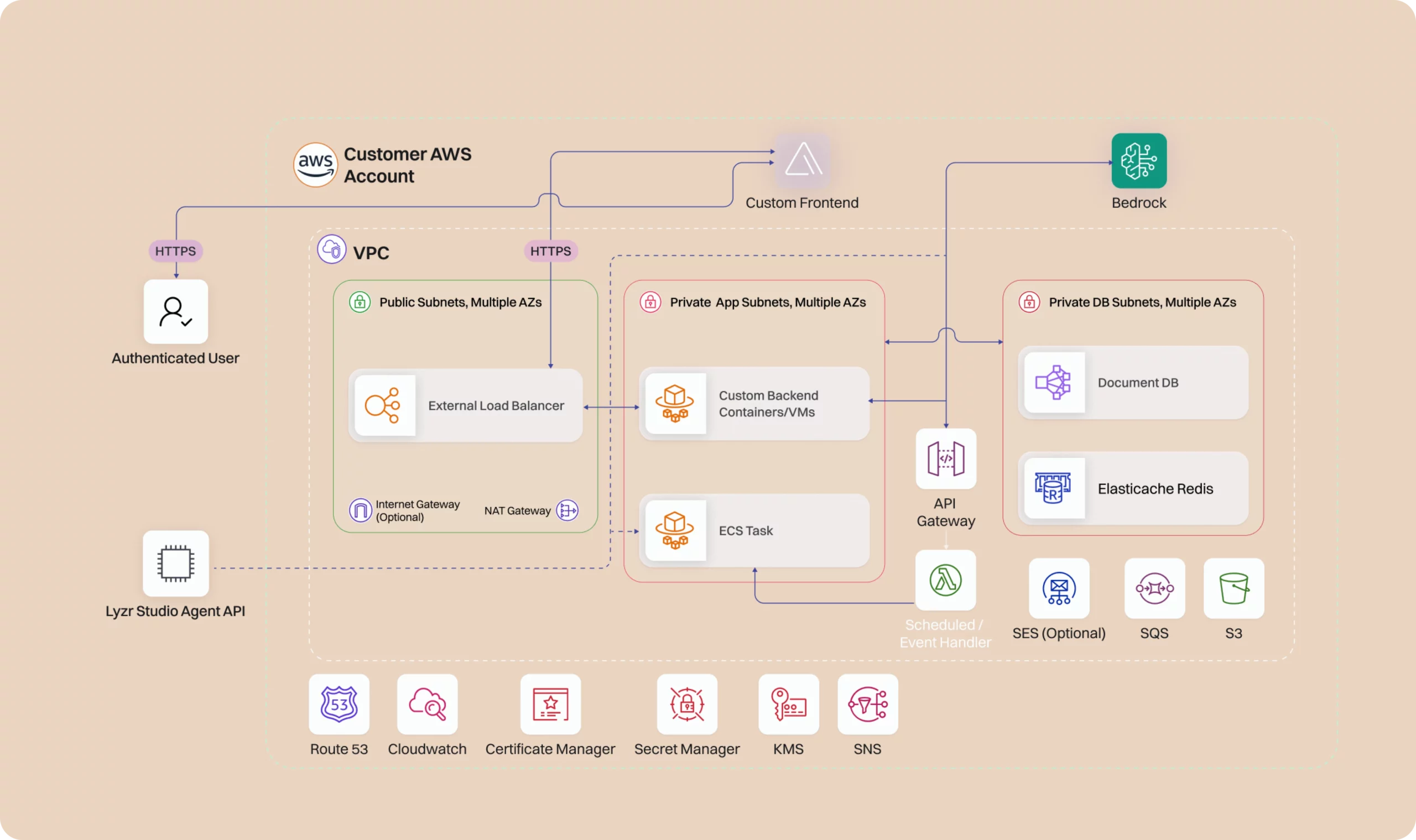
The data resides within the customer's own cloud, ensuring 100% ownership and adherence to data residency requirements.
Lyzr Agent Platform is SOC2, GDPR, and ISO 27001 compliant, ensuring enterprises can run their critical workloads safely.
Lyzr's reflection module reduces the chances of hallucination. This feature is enabled in most critical applications for higher accuracy.