Over half of sales reps miss their quotas. That’s tough for any business relying on new sales to grow. So, how can we help our sales teams hit their targets more consistently?
Think about it: when you give someone a task and equip them with all the tools they need, they’ll likely get it done faster and better.
The same goes for your sales reps. When they have the right materials, tools, and resources, they can convert more leads, close more deals, and ultimately drive revenue.
The key? Sales enablement.
With a solid strategy, you’re giving your team what they need to guide prospects through every stage of the buyer’s journey, improving conversions and creating real impact. Sales enablement platforms are essential tools that facilitate efficient workflows, enhance team collaboration, and replicate the behaviors of top sellers to boost overall sales performance.
We’ll guide you on choosing the best tools to make sales enablement truly effective for your team.
What is Sales Enablement and Who Owns it?
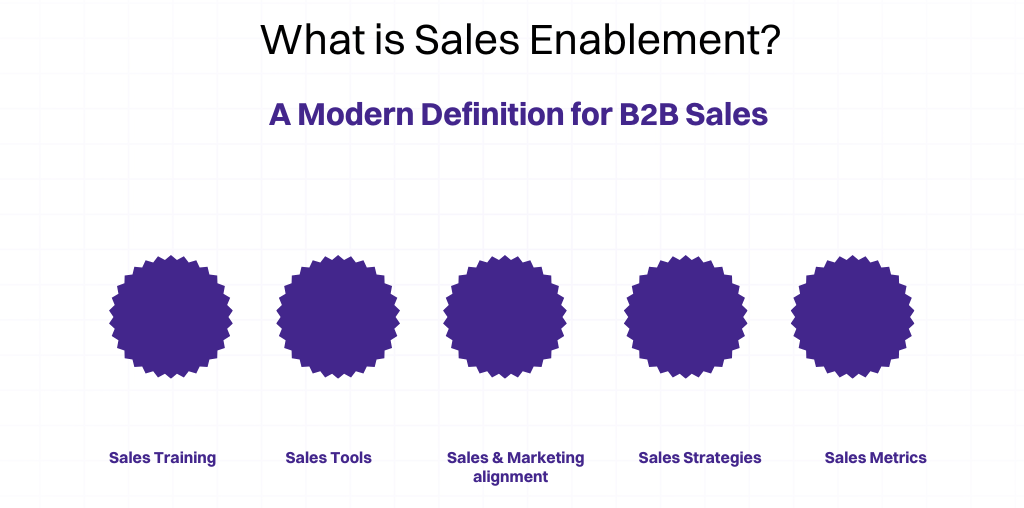
Sales enablement is a strategic approach that provides your sales team with the resources they need to close more deals.
Goal? To ensure each team member can connect with the right prospects at the right time, using the most effective methods to improve sales performance.
When it comes to ownership, sales enablement is a shared responsibility between marketing and sales teams.
| Marketing | Sales Enablement | Sales | Sales Operations (AKA Revenue Operations) |
|---|---|---|---|
| Create, distribute, and track impactful content that boosts buyer engagement and drives revenue growth. | Fuel success across content management, customer engagement, performance analysis, sales training, and coaching including the use of AI roleplay software. | Embrace sales enablement processes and technology in your daily business operations. | Connect sales enablement technology with your CRM, marketing automation, email, and other essential sales tools. |
Marketing equips reps with a variety of resources to help them sell more effectively. These can include videos, blogs, and product guides—tools that support reps in their conversations with potential customers. Reps use these resources to engage with leads, helping them make informed decisions about converting.
A sales enablement manager is essential for creating a consistent training experience, ensuring effective collaboration between departments, and driving higher sales performance through optimized processes and content management. In some cases, a sales outsourcing company can also help teams scale these efforts by extending resources and maintaining consistency in how leads are handled.”
Sales, on the other hand, play a key role in communicating with marketing about what’s missing. If they notice gaps in the content they need to move leads through the buyer’s journey, they can work with marketing to create new materials. This collaboration ensures that reps always have the right tools to engage customers and close more deals. To support this process, using lead management software can help track which content is most effective and where new materials are needed.
Sales Enablement vs. Sales Operations
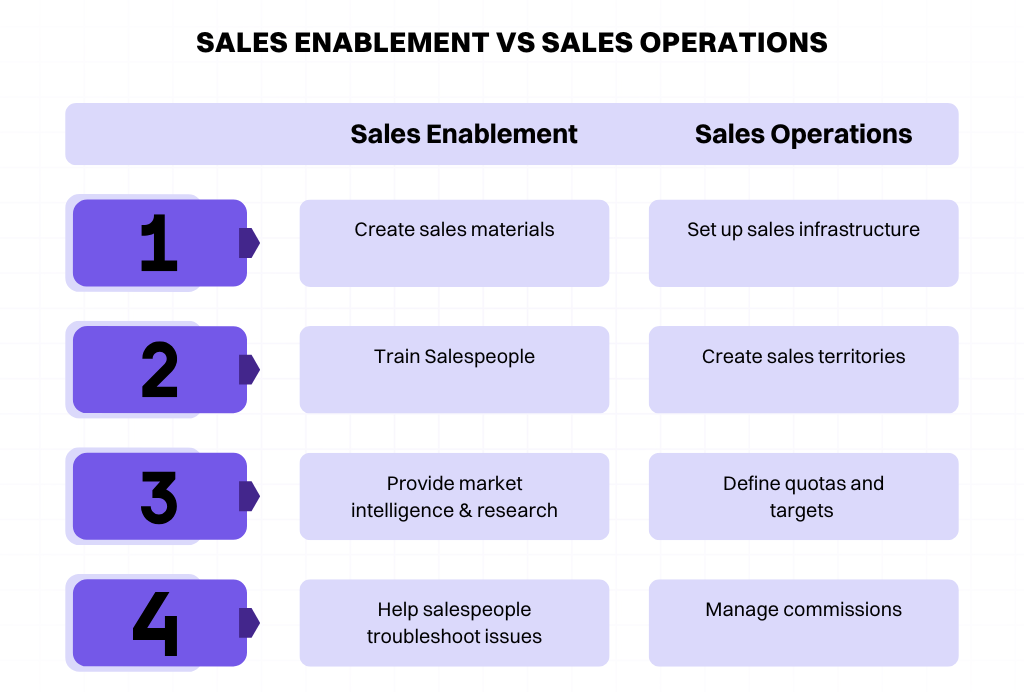
Understanding the difference between sales enablement and sales operations is important. While there’s some overlap, they focus on different areas.
Sales operations focuses on the process and structure that supports sales. This includes:
✔ Setting up sales infrastructure
✔ Creating sales territories
✔ Defining quotas and targets
✔ Managing commissions
Sales enablement, on the other hand, helps salespeople succeed by providing the right tools, training, and support. It includes:
✔ Creating sales materials
✔ Training and developing salespeople
✔ Providing market intelligence and research
✔ Helping salespeople solve problems
Both are crucial, but sales enablement focuses on giving your sales team the resources they need to perform well.
But What Makes Sales Enablement so Important?
Did you know that poor coordination between sales and marketing costs companies up to $1 trillion per year in the U.S. alone?
That’s a huge loss—and it shows why sales enablement is so important.
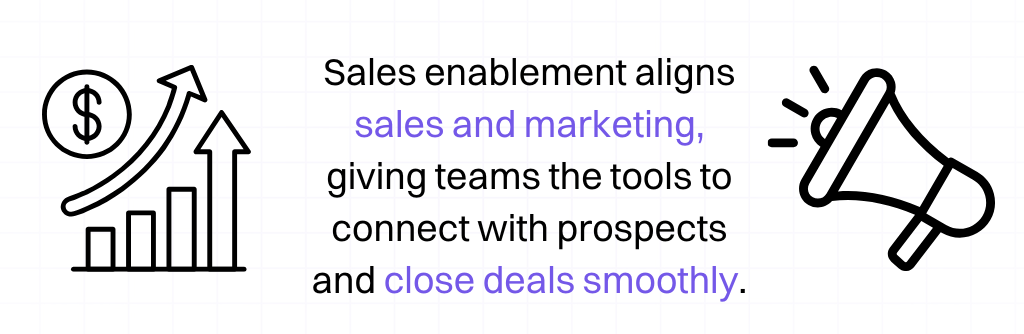
Sales enablement helps close the gap between sales and marketing. It gives your sales team the tools, training, and insights they need to engage with customers more effectively.
By focusing on sales and marketing alignment, sales enablement ensures everyone is on the same page and working toward the same goal.
It brings sales and marketing together.
Sales and marketing can’t afford to work separately; sales and marketing alignment is crucial. They need to understand each other, share information, and collaborate to meet customer needs. Sales enablement makes that happen by ensuring both teams work together smoothly. Digital signage can further strengthen alignment by delivering consistent messaging and real-time updates across both teams. Free digital signage templates provide ready-made layouts for quick and effective communication.
It improves sales performance.
When sales teams don’t have the right resources, they struggle to close deals. Sales enablement provides the tools and content your team needs to engage prospects and turn them into customers. With the right support, your sales team can sell smarter and more effectively.
It uses data to improve.
Sales enablement uses data to see what works and what doesn’t. This helps teams adjust their approach and deliver better results. It’s a continuous cycle of improvement that drives more sales and better customer relationships.
The results speak for themselves.
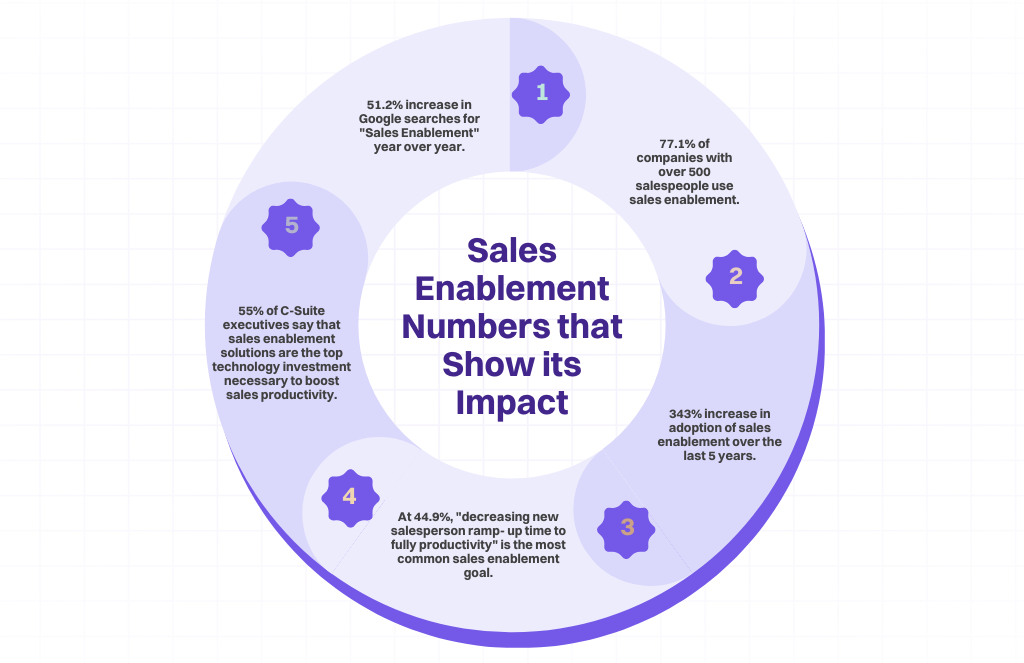
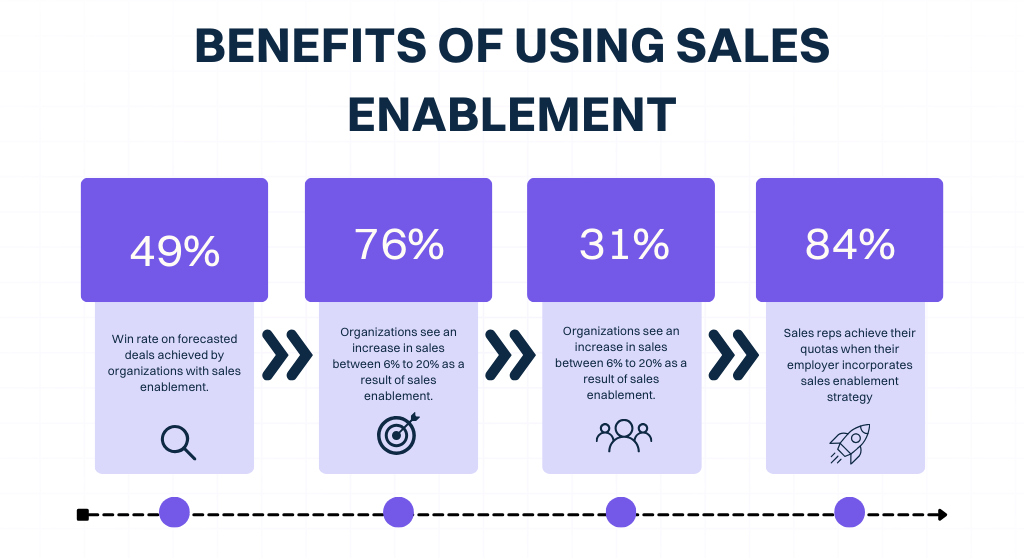
Research shows that companies using sales enablement are seeing better sales results. According to CSO Insights, nearly two-thirds of sales organizations already have a dedicated sales enablement program. That shows just how important it is to success.
Elements of a Sales Enablement Strategy
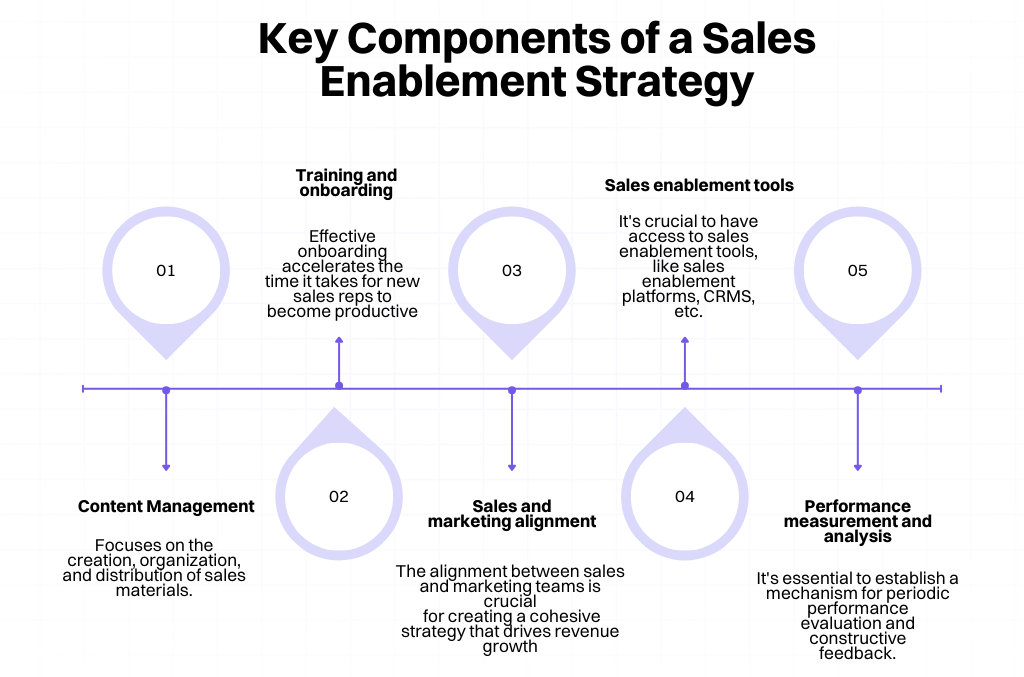
Great sales enablement is about building a strong foundation of sales content and creating a feedback loop that allows for real-time improvements to the sales process. Sales enablement leaders play a crucial role in driving effective sales strategies and fostering communication between sales teams and other departments.
Companies and analysts may have different methods, and that’s okay—many of them work. While the specifics of sales enablement can vary based on industry, organization, and team structure, these four pillars can help guide your efforts:
Pillar 1: Is Your Message Clear and Consistent? It all starts with ensuring everyone in the company is on the same page about the message. The simple question, “What does your company do?” should be clear and consistent across teams.
Pillar 2: Can Your Team Access Content Easily? Is your sales content easy to find when your team needs it most? Sales enablement’s role is to connect the dots, organizing all the valuable content your teams produce into a searchable library.
Pillar 3: Are You Sharing the Right Content at the Right Time? Effective sales enablement ensures the right content reaches your team at the right point in the sales process, empowering them to close deals when it matters most.
Pillar 4: Do You Know What Content Drives Results? Data is key, but don’t forget to listen to your sales reps. Their insights can help you quickly identify what content is making an impact and what needs adjustment.
What are the biggest challenges to Sales Enablement?
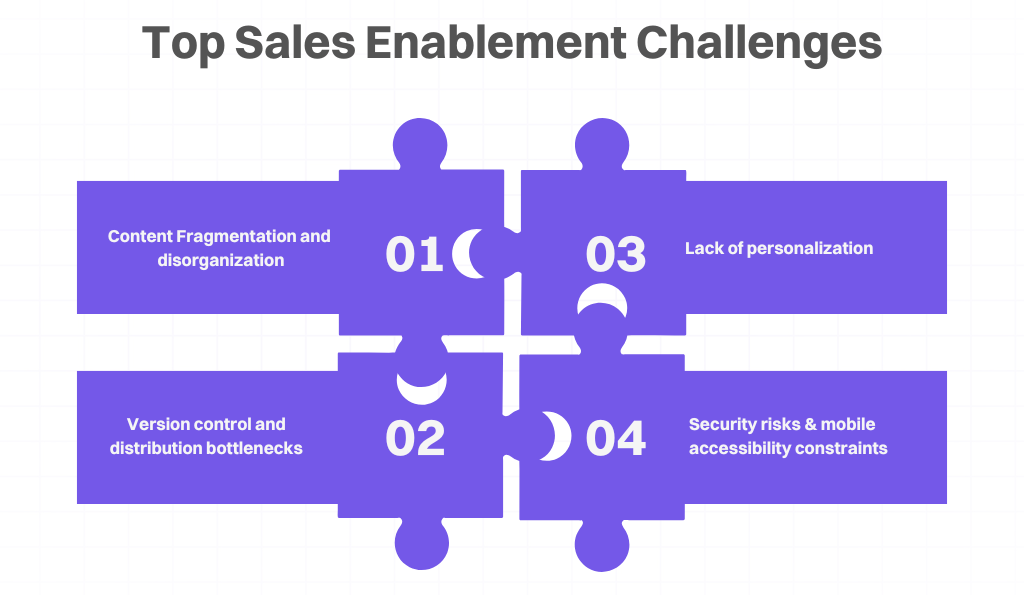
Pitfall 1: A Fragmented Sales Approach
Without a solid sales enablement software, your sales team may be left with a scattered approach. In today’s B2B world, buyers expect clear, concise information that’s easy to digest. But often, your sales team is working with outdated or hard-to-find content that doesn’t align with the buyer’s needs.
This creates a disconnect between what your organization has produced, what the buyer is looking for, and what your sales team is using.
Pitfall 2: Inconsistencies Across Teams
Alignment is key. When different departments are out of sync, it weakens your brand and creates a mixed message.
If your sales team isn’t speaking with the same voice or representing your business consistently, how can they effectively guide buyers through their journey?
If there’s no clear, consistent message, your win rates drop—and so does your business success. That’s why alignment across departments is so critical.
Pitfall 3: Slow Sales
A fragmented approach and inconsistent messaging lead to longer sales cycles, missed targets, and disappointing results. Sales are the lifeblood of your business, and without them, nothing works.
You need a unified message that everyone understands and is on board with. Only then will your team be able to close deals efficiently and move your business forward.
Pitfall 4: Checkbox Activity
As sales enablement grows in popularity, many platforms focus too much on ticking boxes or adding certification badges on LinkedIn, rather than helping teams develop real skills. For sales enablement to work, it’s not enough to just check off tasks.
Your team needs to be engaging with each other and constantly learning. If your platform isn’t fostering real collaboration, practice, and skill development, it won’t help your team succeed.
Why Having the Right Tool is Important for Smooth Sales Enablement Process?
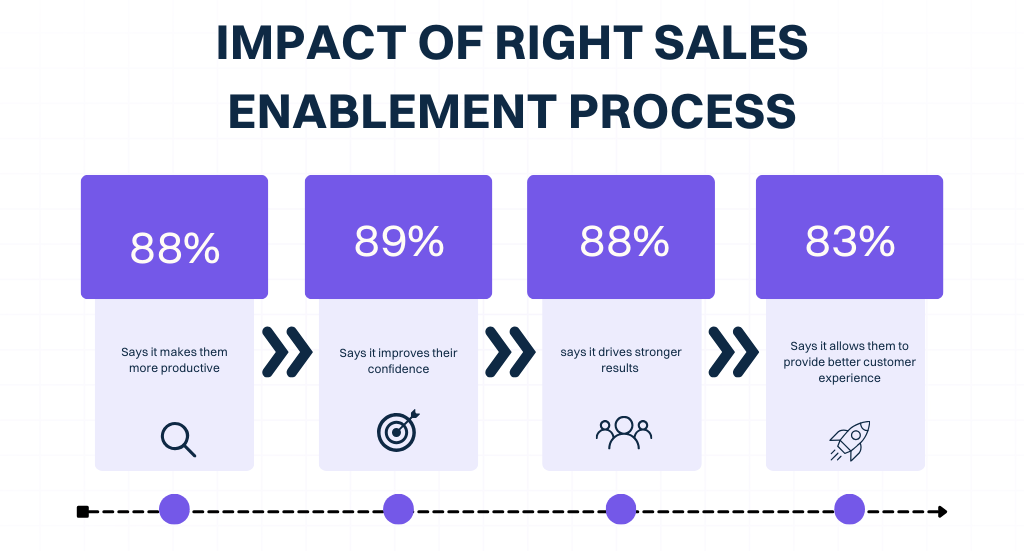
Sales enablement can be tricky, but the right tool makes it much easier to handle. Here’s how having the right sales enablement tool can help:
- Easy Access to the Right Content: Imagine your team always having the most relevant and up-to-date content right at their fingertips. No more hunting through outdated files or searching for the right information. Everything is organized and easy to find.
- Clear, Consistent Messaging: When everyone’s on the same page, it’s much easier to speak with one voice. The right tool ensures your sales, marketing, and other teams are aligned, so your message to buyers is always clear and consistent.
- Faster Sales: With everything in place and ready to go, your team can move quickly. No more delays or confusion. They can close deals faster and keep things moving forward.
- Collaboration and Skill Growth: A good sales enablement tool isn’t just about ticking off tasks. It’s about helping your team learn and work together. With the right platform, they’ll be constantly improving and getting better at what they do.
- More Efficiency, Better Results: When the team has the right tools, they waste less time. They can focus on what really matters, hit their targets, and keep the business growing.
How to Choose the Right Sales Enablement Tool
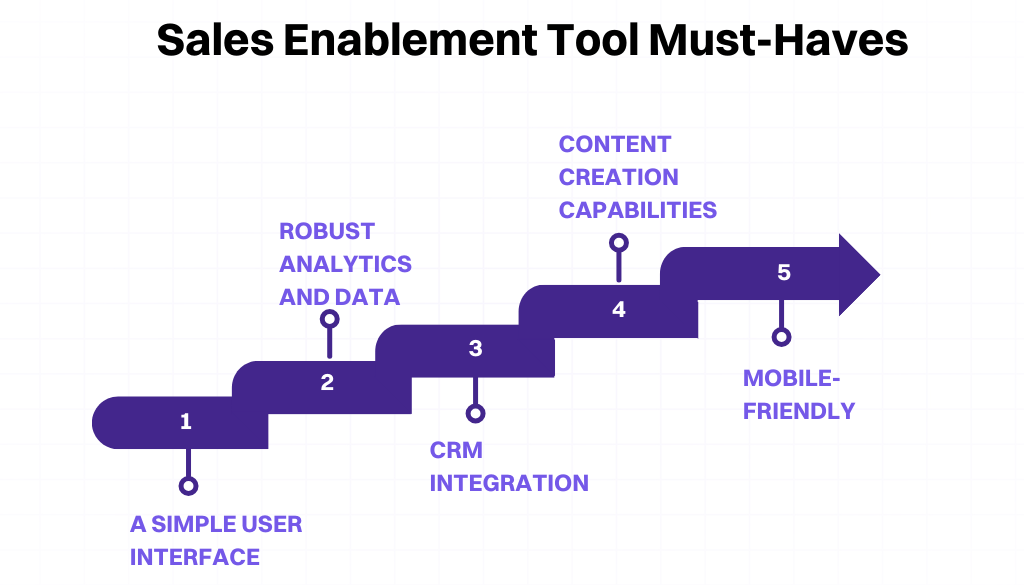
Choosing the right sales enablement platform can make all the difference in your sales team’s success. Here’s what to keep in mind to ensure you pick the best fit for your business:
✔️ Sales Team Needs
Start by understanding what your sales team needs to perform at their best. Do they struggle to find, share, or manage sales collateral? Or perhaps there’s a need for better onboarding and ongoing training? Identifying these gaps will help you select a platform that addresses those specific challenges. You can also test out the platform with a demo to see how it works in action and ensure it meets your needs.
✔️ Ease of Use
Look for a tool that’s easy for your team to use right from the start. Even the best platforms can be difficult to implement if they take too long to learn. Here are some questions to ask during your evaluation:
- How long will it take to get this tool up and running?
- Will I need to buy any other tools to get the most out of this platform? (For example, you may need additional integrations to fully utilize platforms like Salesforce.)
- How much ongoing time is required to maintain the tool?
Since sales reps often spend hours each week searching for answers to questions, a user-friendly interface and mobile access are crucial.
Make sure the platform integrates smoothly with your existing tech stack and offers support and training resources to keep things running smoothly. Don’t forget to check out reviews on platforms like G2 and Techimply for honest feedback from people who use the tool daily.
✔️ Workflow Automation
Sales teams spend a lot of time on repetitive tasks that could be automated. A tool with workflow automation features can save a lot of time and help speed up the sales process. A CRM system with built-in workflow automation can handle tasks, keeping the sales process moving without manual input.
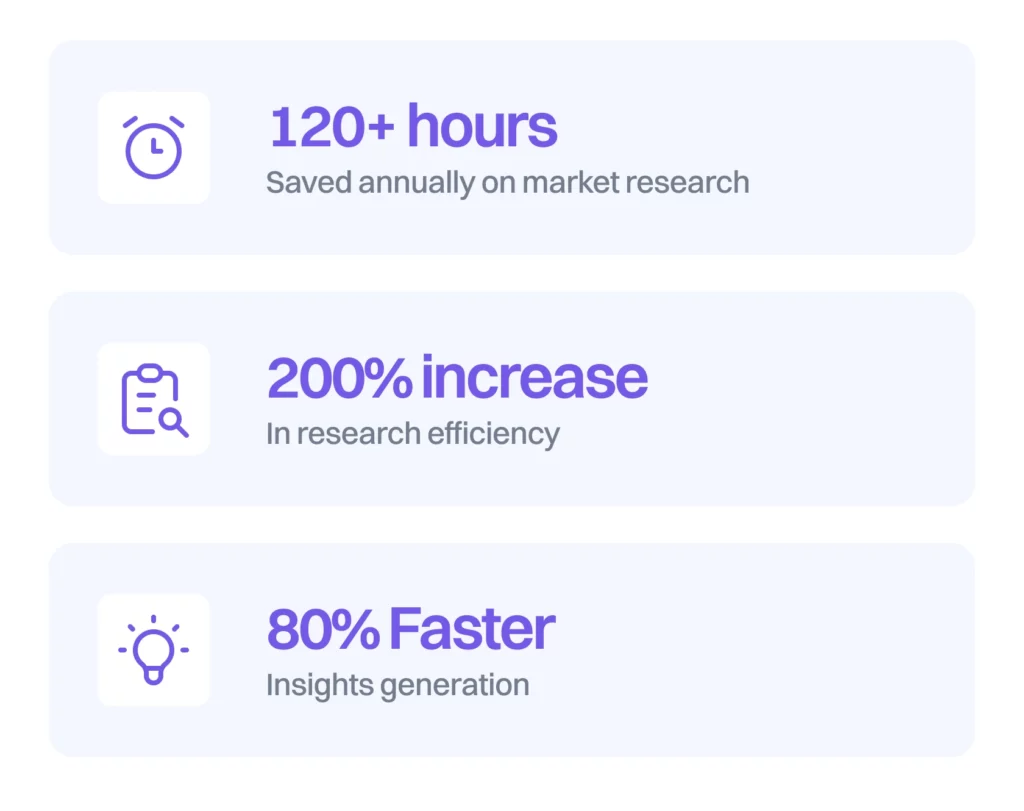
For example, platforms like Skott can automate content creation, so your sales and marketing teams can focus on high-value tasks rather than drafting content from scratch. With Skott you get:
✔️ Customer Support
It’s inevitable that issues will come up with any new platform. But with good customer support, you won’t have to worry. Check if the platform offers multiple support channels like phone, email, and chat to help resolve any issues quickly without disrupting your sales efforts.
✔️ Costs & Licensing
When evaluating costs, focus on finding the best value rather than choosing the cheapest or most expensive option. Make sure the tier you choose offers all the features you need, and if the pricing is customized, research industry averages to help you negotiate.
✔️ Customer Reviews
Before committing, take the time to check customer reviews on independent sites like G2 or Trustpilot. Pay attention to both positive and negative feedback, as it can provide insight into the platform’s strengths and weaknesses. Don’t forget to look at social media for real-world feedback from users.
✔️ AI-powered Capabilities
AI is becoming increasingly important in the sales world, and the right sales enablement tool can leverage AI to streamline processes and improve results. AI-powered features like automated content creation, sales scripts, and follow-up emails can save your team time and improve sales productivity. For example, AI-powered sales roleplay allows reps to practice real-world buyer conversations and handle objections before engaging live prospects.
What Are the Sales Enablement Tools You Can Consider for Your Team in 2024?
Once you’ve put together a strong sales enablement strategy, the next step is rolling it out. But a solid plan needs the right tools to really make it work.
These tools, including technology and apps, help connect your content, marketing, and sales efforts, making it easier for your team to follow the sales process from start to finish.
With the growing competition and more informed buyers, your sales reps need to be prepared at all times—especially during calls with prospects. The right tools give your reps the ability to deliver timely, relevant, and on-brand information exactly when it matters.
The best tools are the ones that solve your specific challenges. So let’s explore some of the top sales enablement tools to consider in 2024, and how they can help drive your success.
1. KrispCall
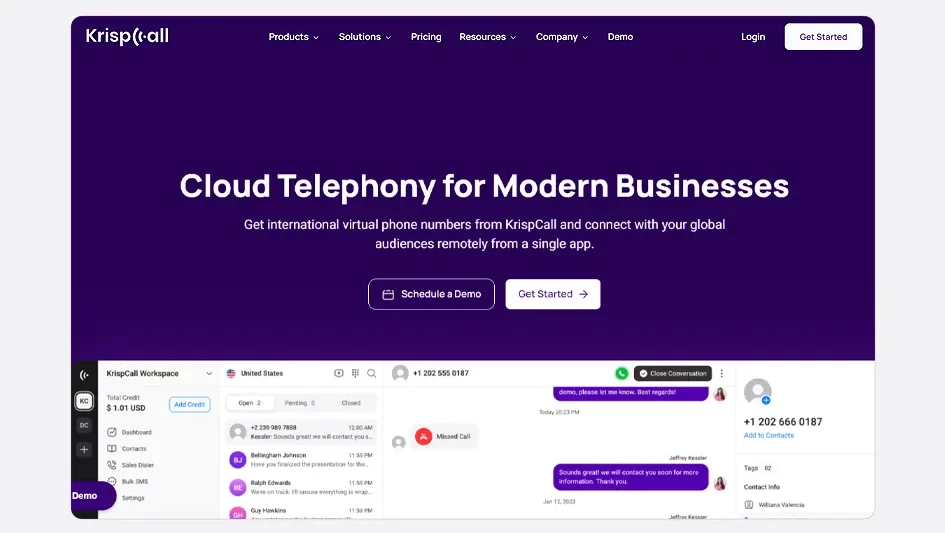
KrispCall is a reliable sales enablement tool that offers valuable call analytics, helping sales teams optimize their performance. It provides insights into various sales metrics, enabling agents to improve with every interaction, even if a prospect doesn’t convert into a customer.
- Call Analytics: Tracks important sales enablement metrics.
- Sales Cycle Insights: Measures how long customers spend at each stage.
- Call Duration Tracking: Monitors how long contact center calls last.
- Conversion Time: Tracks how long it takes to convert a prospect.
- Agent Responsiveness: Measures how quickly and effectively agents respond.
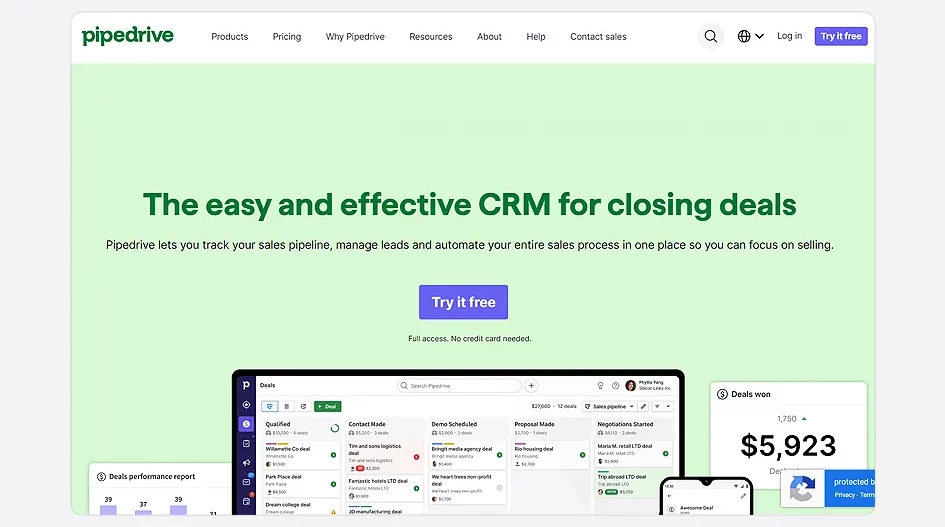
Pipedrive is a CRM software designed to help sales and marketing teams manage their sales processes more effectively. It offers easy-to-use features that streamline customer relationship management and sales tracking.
– Unlimited Contacts: Manage as many contacts as needed.
– Sales Automation Tools: Automate repetitive tasks to save time.
– Workflow Automation: Simplify and speed up business processes.
– Integration with 400+ Business Apps: Easily connect with other tools.
– Kanban-style Visual Pipelines: Organize and track sales stages with ease.
Pricing:
– Essential: $9.90/month/user
– Advanced: $19.90/month/user
– Professional: $39.90/month/user
– Power: $49.90/month/user
Pipedrive helps sales teams stay organized, improve efficiency, and close deals faster.
Monday Sales CRM
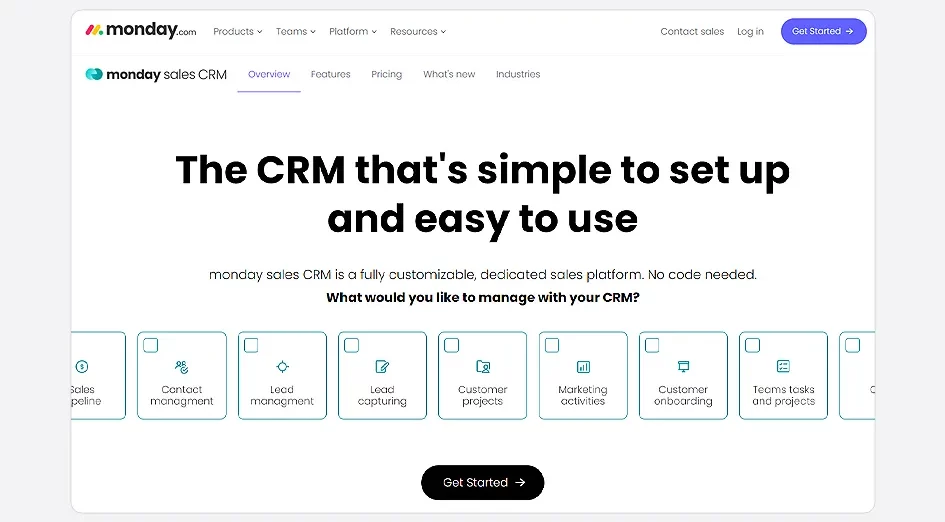
Monday Sales CRM is a customizable sales enablement tool designed for businesses of all sizes across various industries, such as manufacturing, retail, construction, finance, real estate, and healthcare. It helps sales teams manage client outreach and sales pipelines efficiently.
Features:
- Automated Task Generation: Automatically create tasks to stay organized.
- Content Generation & Summarizing: Quickly generate and summarize content.
- Email Composing & Rephrasing: Compose and rephrase emails with ease.
- Formula Building: Build custom formulas for better data analysis.
- Work Automation: Streamline and automate repetitive tasks.
- Lead Management: Manage and track leads effectively.
Pricing:
- Basic CRM: $12/seat/month
- Standard CRM: $17/seat/month
- Pro CRM: $28/seat/month
- Enterprise CRM: Contact the sales team
Crossbeam
Crossbeam is an Ecosystem Revenue platform that enables sales teams to securely collaborate with partners to uncover overlapping accounts, identify warm introduction paths, prioritize outreach, accelerate deals, generate net-new pipeline, and surface co-selling opportunities that would otherwise remain hidden.
Features:
- Co-Selling Workflows: Collaborate with partners to accelerate deals and drive pipeline generation.
- Ecosystem Intelligence: Surface partner insights such as decision-makers, open opportunities, and shared customers.
- Pipeline Generation: Discover high-quality leads (EQLs) and whitespace opportunities.
- Deal Acceleration: Leverage partner customer relationships to improve win rates and shorten sales cycles.
- Lists and Reporting: Build customizable account lists and reports for prioritization, tracking, and collaboration.
- Slack, CRM, and Sales Tool Integrations: Access overlap insights and partner alerts directly within tools like Salesforce, HubSpot, Gong, Outreach, Slack, and more.
- AI Ecosystem Signals: Automate workflows with MCP servers, trigger actions using webhooks, and receive AI-recommended plays to help drive more revenue
Pricing:
- Free plan
- Connector plan: $4800 /year
- Supernode plan: Custom pricing based on team size, integrations, and ecosystem collaboration needs.
- Enterprise plans: Advanced governance, security controls, and large-scale Ecosystem Intelligence capabilities.
Contact Crossbeam for pricing details.
Make Your Sales Process Easier with Jazon
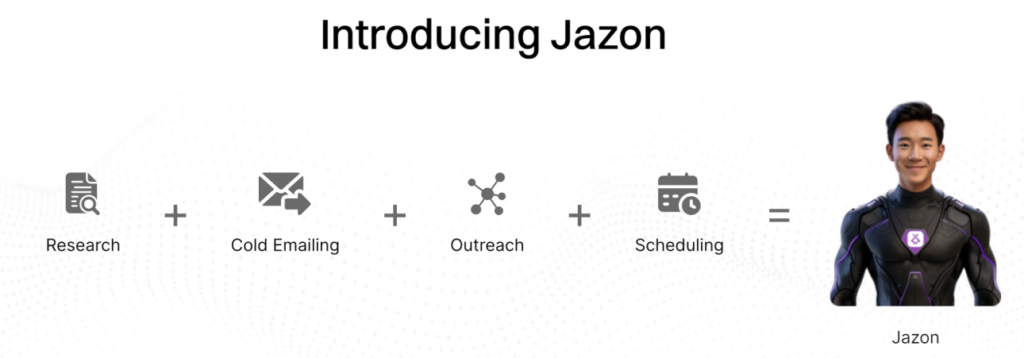
Jazon is your AI SDR that helps you work smarter. It automates routine tasks like follow-up emails and meeting scheduling, so your sales team can focus on the leads that matter most.
Key benefits of using Jazon:
- Automated Follow-Ups: Jazon takes care of repetitive tasks like sending follow-up emails, giving your team more time to focus on building relationships and closing deals.
- Custom Messages: Jazon adjusts messages based on each lead, ensuring your outreach is always relevant and on time.
- Track What Works: The tool helps you see which strategies are performing best, so you can improve your approach.
- Works with Your Tools: Jazon integrates easily with your existing CRM and other tools, so there’s no need to change what you’re already using.
With Jazon, your team can engage with leads more effectively and close deals quicker while saving time on routine tasks. It’s a simple solution to improve sales productivity.
Ready to try it? Book a demo now and see how Jazon can make your sales process smoother.
Book A Demo: Click Here
Join our Slack: Click Here
Link to our GitHub: Click Here